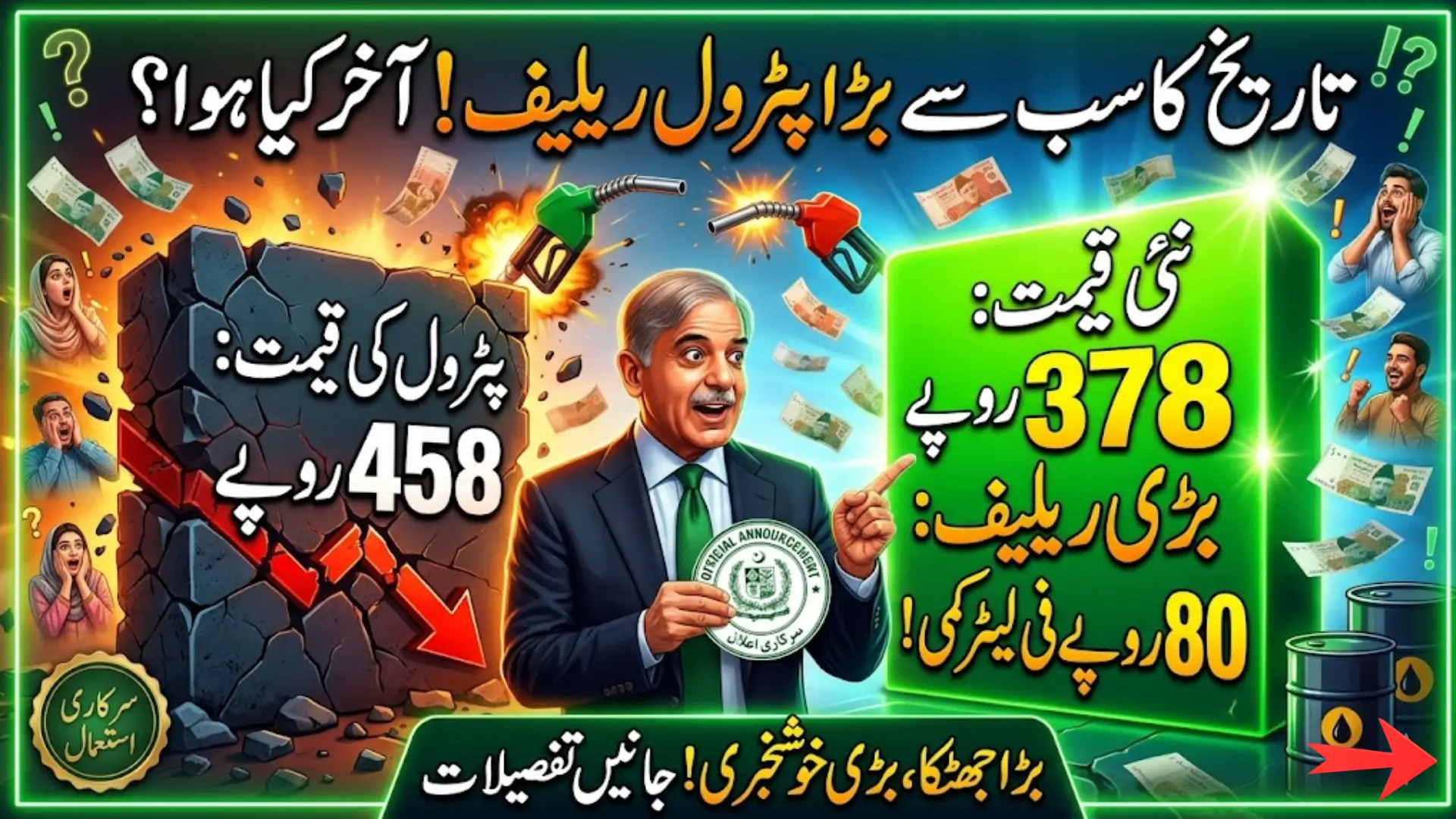
Petrol Price Reduced to Rs378 in Pakistan
Petrol Price Reduced to Rs378 in Pakistan Prime Minister Shehbaz Sharif has announced a major relief for citizens by reducing the petrol price by Rs80 per litre. After a record increase that pushed petrol prices to Rs458 per litre, the government has now brought the rate down to Rs378 per litre across Pakistan. This decision came after public concern and growing pressure due to rising inflation and transportation costs.
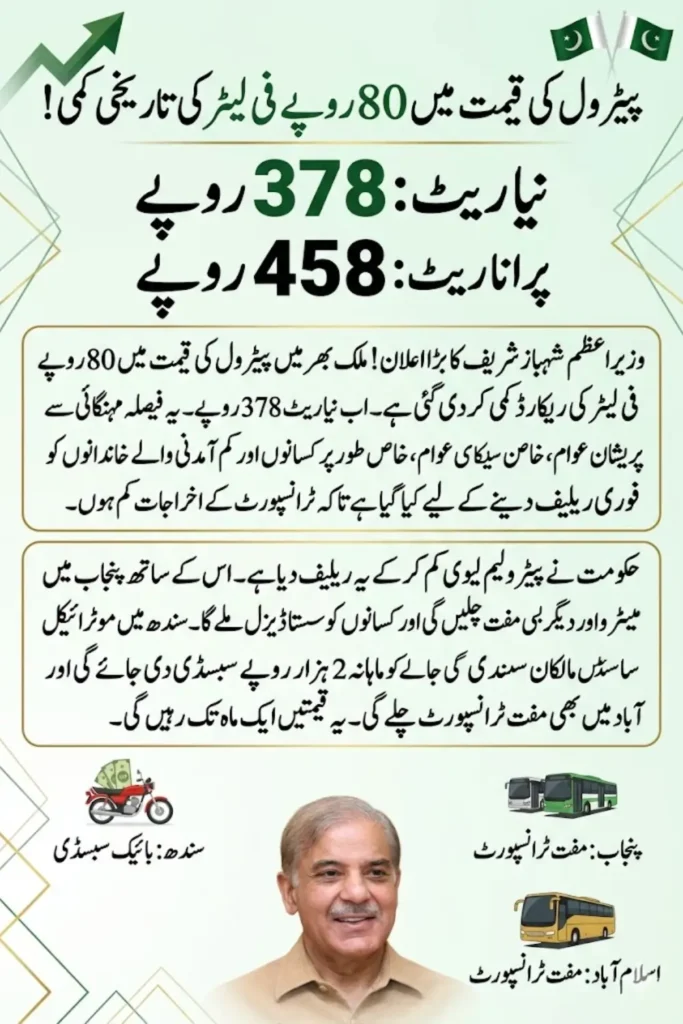
The new petrol price took effect nationwide at 12am Saturday and will remain in place for one month. The government stated that this temporary relief aims to support farmers, low-income families, transporters, and small businesses. Officials also explained that Pakistan is facing global inflation and rising oil prices due to international conflicts, forcing the government to balance public relief with economic stability.
You Can Also Read: Benazir Payment Increase 5000 – Big Relief Announced for BISP Beneficiaries in 2027
Why Petrol Prices Increased to Rs458 Per Litre in Pakistan
The recent surge in petrol prices occurred due to rising global oil prices linked to the ongoing Middle East tensions and Iran-US conflict. Pakistan heavily relies on imported oil, and disruptions in global supply chains increased fuel costs significantly. The government explained that the price increase was unavoidable because international crude oil prices rose sharply within a short period.
You Can Also Read: Petrol Relief in Pakistan 2026 – Government Announces Major Subsidy After Record Fuel Price Increase
Several key reasons contributed to the petrol price hike:
- Rising international crude oil prices
- Strait of Hormuz supply disruptions
- Pakistan’s dependency on imported oil
- Increasing transportation and freight costs
- Limited government financial resources
Due to these factors, petrol prices increased by Rs137.23 per litre, while high-speed diesel rose by Rs184.49 per litre. Kerosene oil prices also increased, creating additional pressure on households and businesses across Pakistan.
You Can Also Read: Pakistan Petrol Price Increased 2026 – Petrol Rs458.4 and Diesel Rs520 After Massive Fuel Hik
PM Shehbaz Sharif Announces Rs80 Per Litre Petrol Relief
In a late-night address to the nation, Prime Minister Shehbaz Sharif announced a reduction in petroleum levy, which helped decrease petrol prices by Rs80 per litre. The prime minister said the government decided to provide relief after carefully reviewing economic conditions and public hardship caused by inflation.
You Can Also Read: Prime Minister Rs 13000 Relief Portal pmrrp.nitb.gov.pk 2026
Important highlights of the announcement include:
- Petrol price reduced from Rs458 to Rs378
- Relief effective nationwide immediately
- Price reduction valid for one month
- Focus on farmers and low-income households
- Government monitoring global oil prices
The prime minister stated that Pakistan, like many other countries, is dealing with global inflation. He emphasized that the government is using limited resources to provide maximum relief to citizens during difficult economic conditions.
Government Announces Austerity Measures Alongside Fuel Relief
Along with the petrol price reduction, the government also introduced austerity measures to control public spending. Prime Minister Shehbaz Sharif announced that all federal cabinet members will forgo their salaries for the next six months as part of these efforts.
Additional government measures include:
- Cabinet members to forgo salaries for six months
- No increase in train fares
- Road taxes to remain unchanged
- Early market closures to save energy
- Targeted subsidies for transporters and farmers
These measures aim to reduce government expenditures while ensuring citizens receive maximum relief. Officials stated that the government is committed to managing resources responsibly during the global fuel crisis.
Punjab Government Announces Free Transport and Diesel Subsidy
Punjab Chief Minister Maryam Nawaz announced major relief measures following the petrol price increase. The Punjab government introduced free public transport across intra-city routes to reduce travel costs for citizens.
Punjab relief initiatives include:
- Free Metro Bus services
- Free Orange Line Train
- Free Speedo Bus services
- Free Green Electric Bus
- Diesel subsidy for farmers
Farmers with landholdings up to 25 acres will receive diesel subsidy of 10 litres per acre at Rs150 per litre. The Punjab government also announced subsidies for motorcyclists and transporters to ensure that fares do not increase.
Sindh Government Announces Rs55 Billion Relief Package
Sindh Chief Minister Syed Murad Ali Shah announced a Rs55 billion relief package aimed at supporting low-income citizens. The package focuses on motorcyclists, farmers, and transporters affected by rising fuel costs.
Key benefits of Sindh relief package include:
- Rs2,000 monthly subsidy for motorcycle owners
- Support for 6.7 million registered bikes
- Rs1,500 per acre for small farmers
- Transport subsidy for buses and trucks
- Digital registration system for payments
The Sindh government explained that the targeted subsidy system will ensure that financial assistance reaches deserving individuals directly through bank transfers.
Free Public Transport Announced in Islamabad
The federal government also introduced free public transport in Islamabad for 30 days. Interior Minister Mohsin Naqvi confirmed that the Ministry of Interior will bear the cost of this initiative.
Important details include:
- Free public buses in Islamabad
- 30-day relief period
- Rs350 million allocated
- Immediate implementation
This step aims to reduce fuel expenses and provide temporary relief to daily commuters.
Global Fuel Crisis and Its Impact on Pakistan
Pakistan’s economy has been affected by rising global oil prices and international conflicts. The ongoing Iran-US tensions and disruptions in the Strait of Hormuz increased fuel prices worldwide.
Major global factors affecting Pakistan include:
- Middle East conflict
- Rising crude oil prices
- Oil supply disruptions
- Inflation pressure
- Increased import costs
These challenges forced Pakistan to adjust fuel prices and introduce relief measures to protect citizens.
Petrol Price Comparison Table
| Fuel Type | Previous Price | New Price | Change |
|---|---|---|---|
| Petrol | Rs458 | Rs378 | Rs80 Decrease |
| Diesel | Rs520.35 | Unchanged | — |
| Kerosene | Rs457.80 | Unchanged | — |
Provincial Relief Package Summary
| Province | Relief Type | Details |
|---|---|---|
| Punjab | Free Transport | Metro, Orange Line, Speedo |
| Sindh | Bike Subsidy | Rs2,000 monthly |
| Punjab | Farmer Subsidy | 10 litres per acre |
| Sindh | Farmer Support | Rs1,500 per acre |
| Islamabad | Free Transport | 30 days |
Who Will Benefit From Petrol Price Reduction
The petrol price reduction is expected to benefit multiple groups across Pakistan. The government aims to reduce inflation and ease transportation costs.
Beneficiaries include:
- Farmers
- Motorcyclists
- Transporters
- Low-income families
- Small business owners
These measures are designed to reduce the economic burden and improve daily life for citizens.
Government Future Plan on Fuel Prices
The government stated that petrol prices will be reviewed after one month. Officials expressed hope that global oil prices may stabilize soon, allowing further relief.
Government future plans include:
- Monitoring international oil prices
- Continuing targeted subsidies
- Controlling inflation
- Supporting farmers and transporters
The prime minister emphasized that the government will continue to protect citizens during global economic uncertainty.
FAQs
What is the new petrol price in Pakistan?
The new petrol price is Rs378 per litre after an Rs80 reduction announced by the prime minister.
When did the new petrol price take effect?
The new petrol price became effective nationwide at 12am Saturday.
How long will the petrol price relief remain?
The petrol price reduction will remain in place for one month.
Why did petrol prices increase earlier?
Petrol prices increased due to rising global oil prices and Middle East tensions.
Who will benefit from the petrol price reduction?
Farmers, transporters, motorcyclists, and low-income households will benefit from this relief.