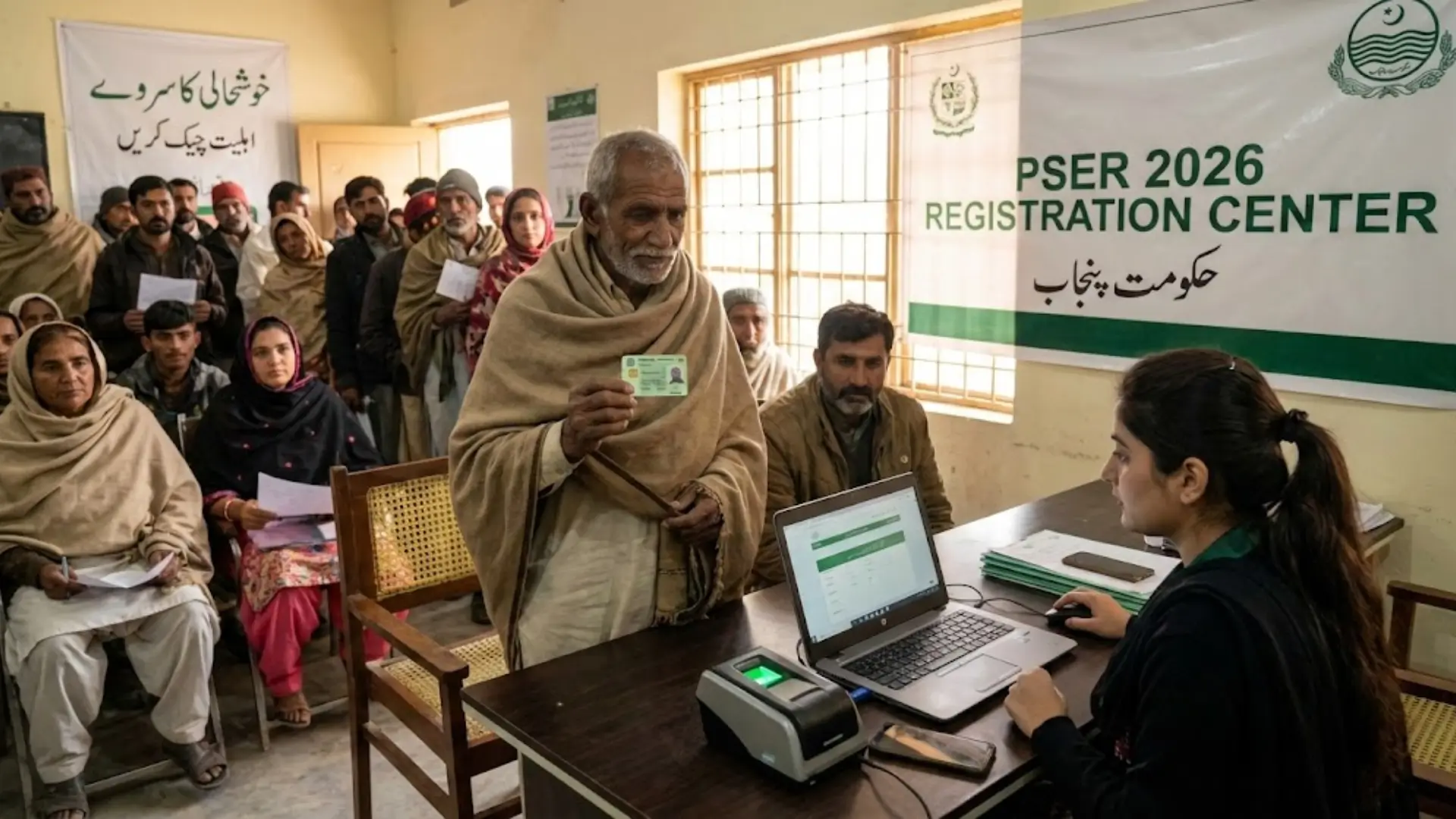
Why PSER 2026 Is Becoming Essential for Every Household in Punjab
PSER 2026 Registration & Eligibility
PSER 2026 Registration & Eligibility Across Punjab, whenever a new government relief package or welfare scheme is announced, thousands of families rush to apply. Many qualify, but many are left out simply because their household data is not available in the official system. This is where PSER 2026 plays a critical role. The Punjab Social and Economic Registry is now the backbone of most provincial welfare planning.
You Can Also Read: PSER 2026 Registration & Eligibility
From what I have observed while covering public welfare programs, families who have their data properly recorded in PSER face fewer problems during scheme verification. The government now depends heavily on digital records to shortlist deserving households. If your information is missing, outdated, or incorrect, your chances of selection may reduce. That is why checking PSER 2026 registration and eligibility by CNIC has become extremely important.
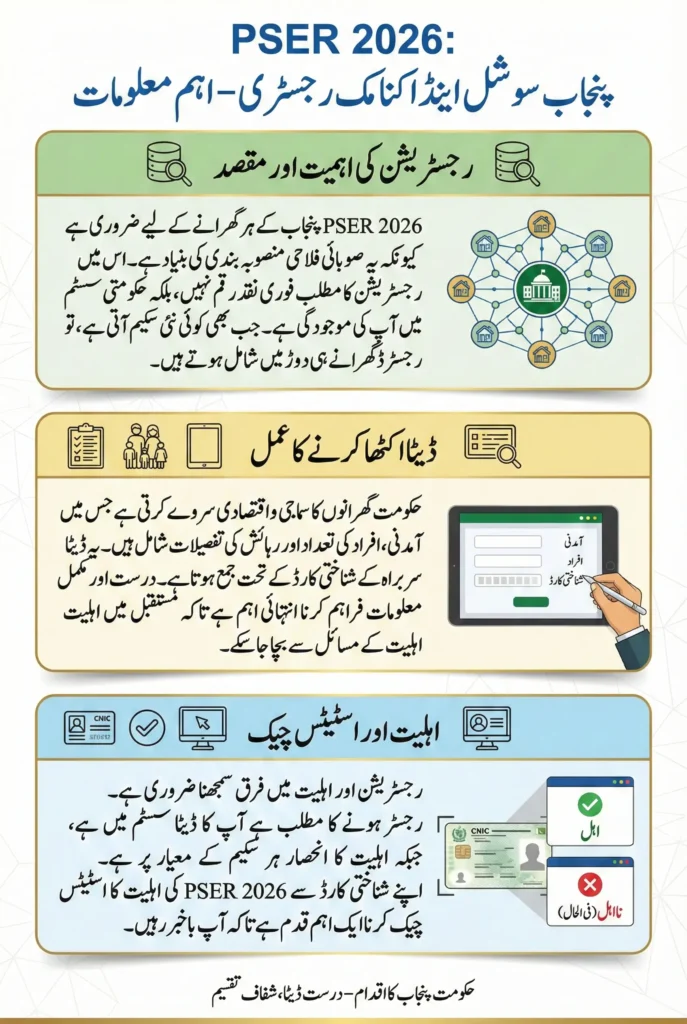
In simple terms, PSER is not about immediate money. It is about being visible in the Punjab government’s system. If your household is registered, you are at least in the race whenever a new scheme is launched.
You Can Also Read: PSER 2026 Registration & Eligibility
Understanding the Purpose of Punjab Social and Economic Registry
The Punjab Social and Economic Registry (PSER) is a province-wide database that collects social and economic details of households. Many people still think it is a direct cash scheme, but that is not correct. PSER does not provide lump sum financial assistance on its own. Instead, it works as a foundation for identifying deserving families for upcoming programs.
The government conducts a social survey to gather detailed information about families. This includes income level, employment status, education, housing conditions, and number of dependents. The purpose is to create a verified record of households across Punjab so that future schemes can be distributed fairly.
You Can Also Read: PSER 2026 Registration & Eligibility
The main objectives of PSER include:
- Creating a centralized household database
- Identifying low-income and deserving families
- Improving transparency in welfare distribution
- Reducing political influence in beneficiary selection
- Ensuring government aid reaches the right people
When a new subsidy, ration program, or financial assistance package is introduced, authorities use PSER data to filter eligible households. This makes the process faster and more transparent.
How the PSER Household Survey Collects Your Information
The PSER survey is designed to record complete details of a family under one household head. Usually, the head of the family is registered through their CNIC, and all members are linked under that record. Survey teams collect information physically or through official channels and then upload it into the government’s digital system.
The survey generally includes:
- CNIC details of family head
- Total number of household members
- Monthly income sources
- Type of residence (owned or rented)
- Utility connections like electricity and gas
- Employment and education details
It is very important to provide accurate and honest information. Even small mistakes in CNIC numbers, spellings, or income reporting can cause problems during eligibility verification. Many people later complain about rejection, but often the issue is incorrect or incomplete survey data.
You Can Also Read: PSER 2026 Registration & Eligibility
From experience, I have seen that families who cooperate fully during the survey and keep their information updated rarely face major issues when checking eligibility.
Complete PSER 2026 Registration Process Explained
If you want to be considered for upcoming Punjab government schemes in 2026, you must ensure that your household is properly registered in PSER. Registration is not complicated, but it requires attention to detail.
You Can Also Read: PSER 2026 Registration & Eligibility
Before starting registration, make sure:
- Your CNIC is valid and not expired
- All family members’ details are correct
- Your income information is realistic and accurate
- You provide an active mobile number
During registration, the following information is typically required:
- Head of household CNIC number
- Names and CNIC/B-Form details of family members
- Monthly household income
- Employment status of earning members
- Address and housing type
After submission, your data becomes part of the Punjab government’s registry system. This does not guarantee benefits, but it ensures your household is included in official records for future evaluation.
You Can Also Read: PSER 2026 Registration & Eligibility
How to Perform PSER 2026 Eligibility Check by CNIC
Checking PSER eligibility by CNIC is a simple but important step. Many people assume that if they once participated in a survey, they are automatically eligible for all schemes. This assumption can be risky.
To check your eligibility status, you generally need:
- CNIC number of the family head
- Correct personal details for verification
- Access to the official PSER platform if available
When you enter your CNIC, the system checks whether your household data exists in the registry. If your record is found, it confirms that you are registered. However, registration and eligibility are two different things. Being registered means your data is in the system. Eligibility depends on specific scheme criteria.
What Eligibility in PSER Actually Means
There is a common misunderstanding among the public that PSER eligibility means instant financial assistance. This is not true. Eligibility simply means your household record is complete and available for government review when new schemes are announced.
Eligibility in PSER means:
- Your social survey has been completed
- Your data is saved in the government system
- You may be considered for future programs
- Your household meets basic documentation requirements
It does not mean:
- Guaranteed cash payment
- Automatic approval for every scheme
- Permanent beneficiary status
The final selection always depends on the criteria of each specific program. For example, a scheme for unemployed individuals will focus on employment status, while a ration subsidy program may prioritize low-income families.
How PSER Data Supports New Punjab Government Schemes
Whenever the Punjab government introduces a new relief package, authorities use PSER data to shortlist families. This system helps avoid favoritism and ensures more transparent distribution of benefits.
For example, if a scheme targets households earning below a certain income level, officials filter data directly from PSER. Families matching the criteria are then contacted or shortlisted for further verification.
Benefits of using PSER data include:
- Faster identification of deserving households
- Reduced manual paperwork
- Digital verification of income and family details
- Improved transparency and accountability
- Fair selection based on recorded data
This system has significantly changed how welfare schemes operate in Punjab. Instead of random selection, decisions are now more data-driven.
Key Difference Between Registration, Eligibility and Beneficiary Status
Understanding these terms can save you from confusion and false expectations. Many people mix up registration with guaranteed benefits.
| Term | Meaning in PSER System |
|---|---|
| Registered | Your household data is recorded in PSER database |
| Eligible | Your data matches criteria of a specific scheme |
| Beneficiary | You are officially selected and approved for benefits |
This table clearly shows that registration is only the first step. Eligibility depends on scheme rules, and beneficiary status is the final approval stage.
Common Mistakes That Can Affect Your PSER Status
Over the years, many families have faced issues due to avoidable mistakes. These small errors can delay or block eligibility confirmation.
Common problems include:
- Entering incorrect CNIC number
- Not updating changes in family members
- Providing false income information
- Ignoring survey visits
- Using inactive mobile numbers
To avoid problems, always provide truthful information and keep your records updated. Government systems are becoming more digital and interconnected, making verification stricter than before.
Final Thoughts on PSER 2026 Registration and CNIC Eligibility Check
PSER 2026 is not just another survey. It is the foundation of many upcoming Punjab government welfare schemes. If your household is properly registered and your data is accurate, you increase your chances of being considered for future assistance programs.
For ordinary citizens in Punjab, the message is simple. Do not ignore PSER registration. Confirm your eligibility through CNIC, ensure your household details are correct, and stay informed about official updates. Being part of the registry does not guarantee money today, but it keeps your family visible in the system for tomorrow’s opportunities.
In today’s digital era, data matters. If your data is complete in PSER, you are one step closer to being considered whenever the government announces new relief or support initiatives in 2026.