CM Punjab Bewa Sahara Card 2026
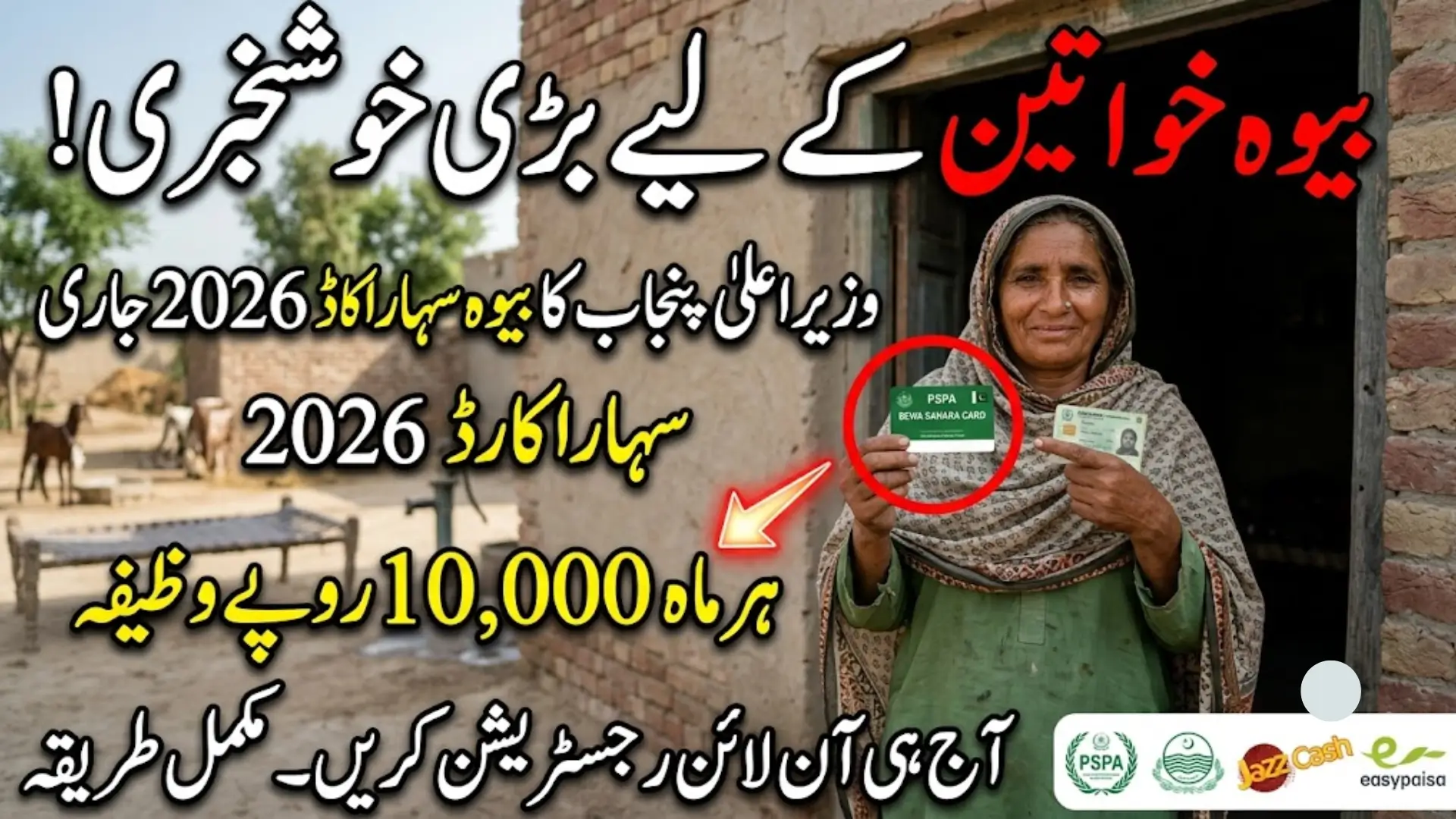
CM Punjab Bewa Sahara Card 2026 Losing a husband doesn’t just mean emotional loss — for many women in Punjab, it also means losing the household’s main source of income overnight. That’s the gap the CM Punjab Bewa Sahara Card 2026 is meant to fill. It’s a welfare initiative from the Punjab Government aimed at widows who are struggling financially, giving them a steady monthly stipend instead of leaving them dependent on relatives or one-off charity.
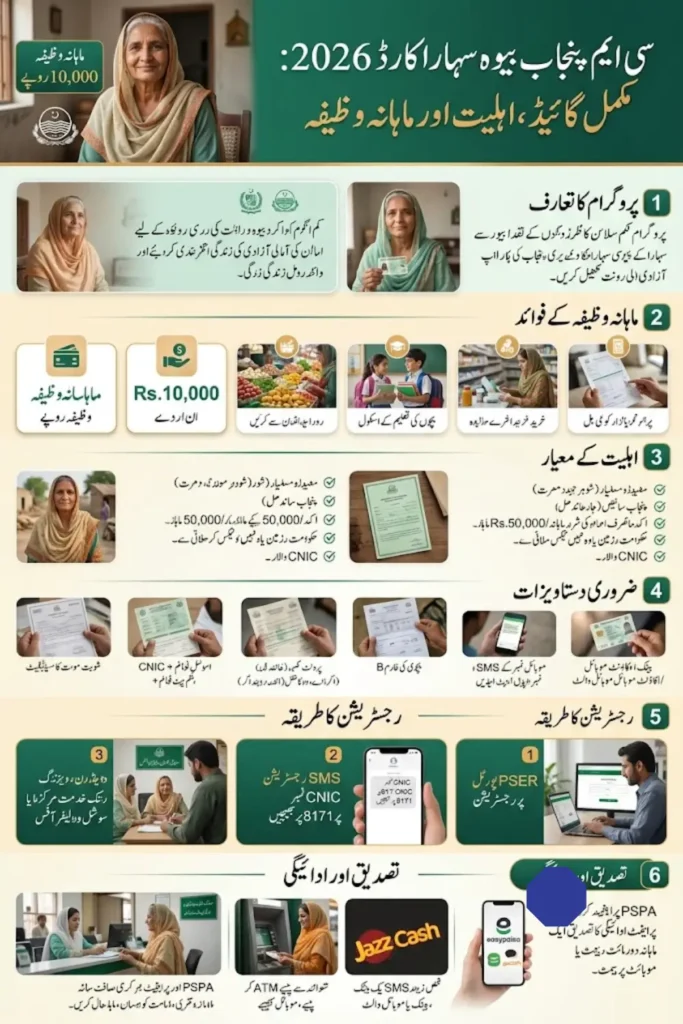
The program runs through the Punjab Social Protection Authority (PSPA) and is verified using the Punjab Socio-Economic Registry (PSER), so the process is meant to be transparent and traceable rather than something handed out informally. The idea isn’t just short-term relief — it’s meant to give widows a predictable income they can plan around.
You Can Also Read: Tecno Camon 50 Ultra Price in Pakistan 2026: Is This the Best Camera Phone Under Rs. 120,000?
Note: Welfare programs like this are periodically updated by the Punjab government. Before applying, verify the latest details, deadlines, and portal links directly through the official PSER website or your nearest e-Khidmat Markaz.
What Exactly Is the CM Punjab Bewa Sahara Card?
At its core, this is a monthly stipend program for widows from low-income households in Punjab. Approved applicants receive Rs. 10,000 per month, meant to go toward everyday essentials — groceries, utility bills, rent, medical costs, and school expenses for children.
The payment itself is transferred directly to the beneficiary’s bank account or mobile wallet, cutting out the middlemen and delays that used to plague older welfare schemes. Everything runs through a digital system tied to official government databases.
You Can Also Read: Ramzan Relief 2027: 8070 PSER Update — Why Applications Get Rejected and How to Fix Yours
Key features:
- Rs. 10,000 monthly financial assistance
- Verification through PSER
- Direct transfer to bank account or mobile wallet (JazzCash/EasyPaisa)
- Transparent, traceable payments
- Both online and offline registration available
Why This Program Exists
Widows in Punjab are among the most financially exposed groups when it comes to sudden loss of household income. The stipend is designed to let them cover daily expenses without leaning on relatives or informal aid — which, practically speaking, isn’t always reliable or dignified.
You Can Also Read: Ramzan Relief 2026 – 8070 PSER Update: Why So Many Applications Got Rejected, and How to Fix Yours
There’s also a bigger goal here: strengthening Punjab’s overall social protection system. By running everything through PSER and PSPA databases, the government is trying to make sure aid actually reaches the women who qualify, rather than getting diverted along the way. It’s also positioned as part of a broader push toward women’s financial independence, not just a one-time handout.
The scheme is built around:
- Supporting low-income widows across Punjab
- Fair, transparent fund distribution
- Encouraging financial independence for women
- Reducing poverty in vulnerable households
- Better access to healthcare and education for affected families
Who Is Eligible?
Not every widow automatically qualifies — there are specific conditions in place, mainly built around widow status, residency, and household income, to keep the program targeted at those who genuinely need it.
You Can Also Read: PSER 2026 Registration & Eligibility Check by CNIC – Latest Punjab Update
| Condition | Requirement |
| Widow Status | Husband must be deceased |
| Residence | Punjab domicile or permanent residence |
| Income Level | Household income below Rs. 50,000/month |
| Employment Status | Not a government employee or tax filer |
| Other Aid | Not already receiving a similar provincial stipend |
Beyond the table above, applicants should also:
- Be 45 years or older, where applicable
- Hold a valid CNIC
- Be registered in PSER as part of a low-income household
- Submit accurate, verifiable information (mismatched records are one of the most common reasons applications get delayed)
Documents You’ll Need
Missing paperwork is the single biggest reason applications get rejected or stuck in limbo. It’s worth gathering everything before you start the process rather than midway through.
Required documents:
- Original CNIC plus a photocopy
- Husband’s death certificate
- Proof of Punjab residence/domicile
- Income or poverty verification documents (if requested)
- Children’s B-Form, if dependents are part of the application
- Bank account details or mobile wallet information
- A registered mobile number for SMS updates
How to Register: Online, SMS, or In Person
One thing Punjab’s government got right here is flexibility — applicants aren’t forced into a single channel. Whether you have internet access or not, there’s a way to apply.
| Method | Where | Support |
| Online | PSER Portal | Self-managed |
| SMS | Send CNIC to 8171 | Quick eligibility check |
| Offline | e-Khidmat Markaz | Staff-assisted |
For online registration: create an account on the official PSER portal using your CNIC and mobile number, fill in personal and household details, upload the required documents, and submit. You’ll get a confirmation SMS once it’s received.
For offline registration: visit your nearest e-Khidmat Markaz or Social Welfare Office with your documents in hand — staff there will walk you through filling out and submitting the form.
What Happens After You Apply: Verification and Payment
Once submitted, applications go through a verification process where authorities cross-check CNIC details, widow status, income, and residency against PSER and NADRA records. This step exists specifically to keep the program limited to genuinely eligible widows.
If approved, you’ll get an SMS confirmation, and the Rs. 10,000 monthly stipend starts landing directly in your bank account or mobile wallet.
The process generally includes:
- CNIC validation via NADRA
- Income and residency checks
- SMS approval notification
- Monthly transfer to bank account or JazzCash/EasyPaisa
- Ongoing payment confirmation messages
What Beneficiaries Actually Gain From This
Beyond the Rs. 10,000 itself, the bigger value is the predictability — knowing there’s a fixed monthly amount coming in changes how a household plans its expenses. It also reduces the pressure many widows feel to depend entirely on relatives.
The program is also designed as a gateway to other welfare initiatives in Punjab, rather than a standalone benefit, so beneficiaries often end up with access to more than just the stipend.
Key benefits:
- Rs. 10,000 monthly financial support
- Transparent, direct payment system
- Better access to healthcare
- Support toward children’s education
- Greater financial independence and dignity
Frequently Asked Questions
Who can apply for the CM Punjab Bewa Sahara Card 2026? Widows who are permanent residents of Punjab, belong to low-income households, and hold a valid CNIC can apply, provided they meet all eligibility conditions.
How much stipend is provided under this scheme? Eligible widows receive Rs. 10,000 per month, paid directly into their bank account or mobile wallet.
How long does verification take? Typically two to four weeks, assuming all documents are complete and accurate.
Can a widow living outside Punjab apply? No — only widows with Punjab domicile or permanent residence qualify.
Is offline registration available? Yes, through e-Khidmat Markaz or Social Welfare Offices, with the required documents in hand.
How are payments delivered? Directly to a registered bank account or mobile wallet, such as JazzCash or EasyPaisa.
Final Word
The CM Punjab Bewa Sahara Card 2026 is a meaningful step toward giving widows in Punjab real financial footing — not through one-time aid, but a consistent Rs. 10,000 monthly stipend backed by a transparent, digitally verified system. Between the strict verification process, multiple ways to register, and direct payments, it’s built to be dependable rather than another scheme lost in bureaucracy.
If you or someone you know qualifies, it’s worth gathering the required documents early and applying through the official channels — either online, via SMS, or at an e-Khidmat Markaz — rather than waiting.
This article is for informational purposes. Eligibility criteria, stipend amounts, and registration procedures are subject to change by the Punjab Government — always confirm current details through the official PSER portal or your local Social Welfare Office before applying.