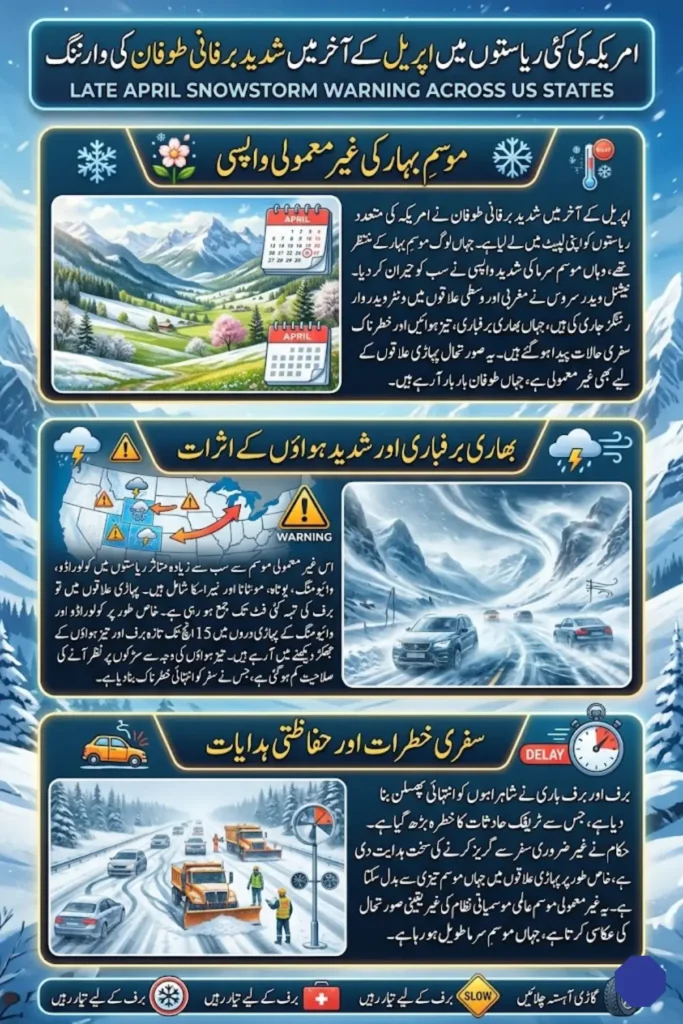
Late April Snowstorm Warning Across US States
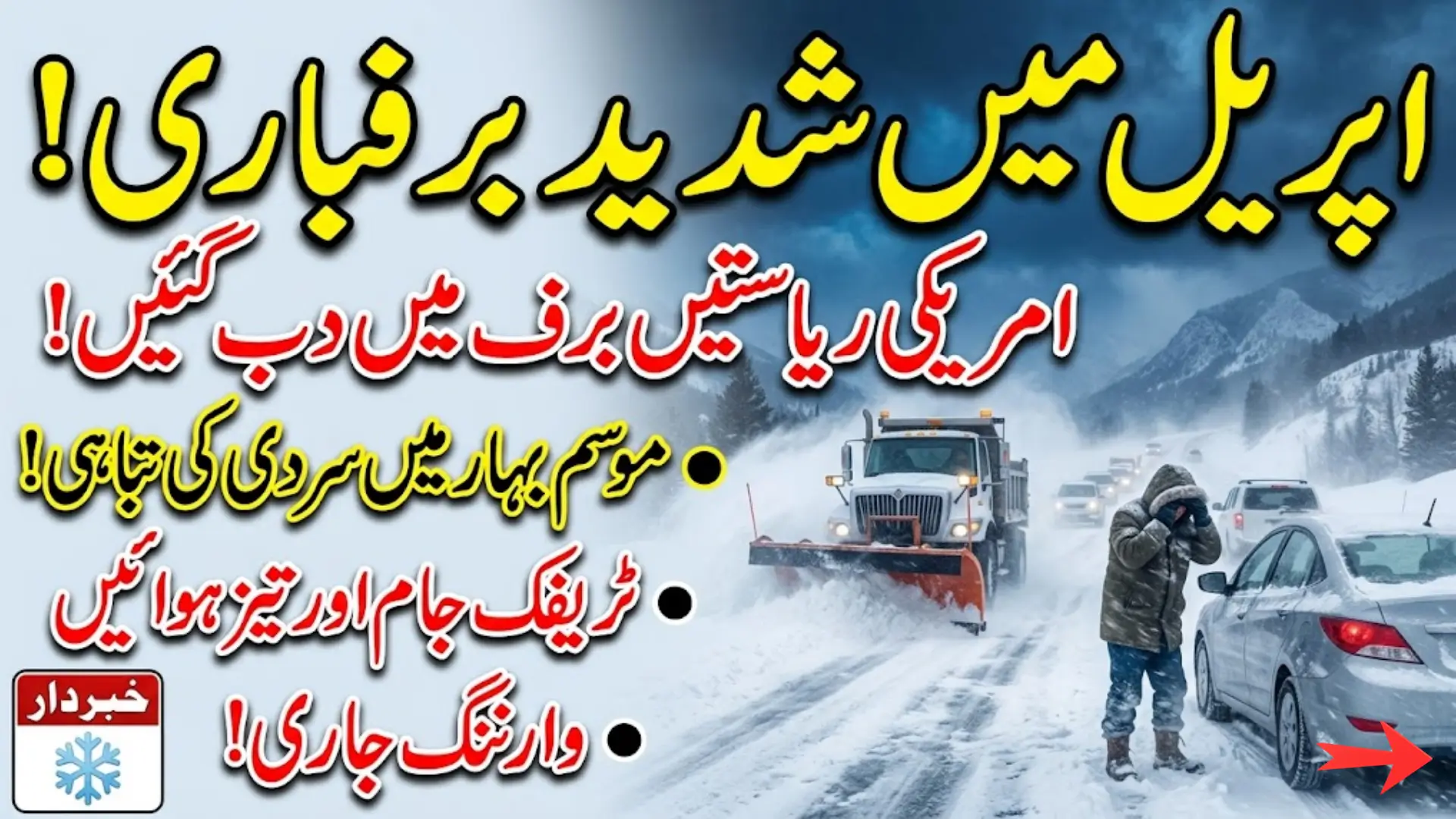
Late April Snowstorm Warning Across US States Even though the calendar has clearly entered late April and many people expect spring weather, winter is still strongly active in several parts of the United States. According to the National Weather Service (NWS), multiple states in the western and central regions are again experiencing winter weather warnings, heavy snowfall, and dangerous wind conditions. This situation is unusual because April is normally a transition period into warmer spring weather, yet mountain regions are still receiving strong snowstorms.
For Pakistani readers, this may sound surprising because in most parts of Pakistan, April already brings heat and dry weather. However, in countries like the United States, especially in high-altitude areas such as the Rockies and Sierra Nevada, weather patterns can remain cold for much longer. This late April snowstorm is affecting transportation, tourism, and daily life in several states, showing how unpredictable global weather systems have become.
You Can Also Read: Xiaomi 17T Pro Price, Specs, Battery and Launch Details
Unusual Return of Winter in Spring Season
What makes this weather situation important is not just the snowfall itself, but the timing. Spring is supposed to be a season of melting snow and rising temperatures, but instead, strong weather systems are bringing winter conditions back again. Meteorologists explain that an upper-level atmospheric trough is continuously moving cold air into mountain regions, allowing new snow to form even at this late stage of the year.
You Can Also Read: Punjab e-Learn She Earn Program 2026
These weather systems are not short-lived. Instead, they are repeating in cycles, meaning one storm is followed by another with little gap in between. This creates a situation where snow does not get enough time to melt, and accumulation continues in high-altitude areas. For local residents, this feels like winter has extended far beyond its normal season.
You Can Also Read: How to Get Rs. 100,000 from CM Punjab Rahmat Card 2026
Key observations from this unusual pattern:
- Winter-like conditions still active in late April
- Continuous movement of cold air systems over mountain regions
- Repeated storm cycles increasing snow accumulation
- Delay in normal spring temperature rise
States Affected by Heavy Snowfall and Weather Alerts
Several US states are currently under winter weather advisories issued by the National Weather Service. The most affected regions include Colorado, Wyoming, Utah, Montana, Nebraska, and parts of Nevada and Alaska. Each of these states is experiencing different levels of snowfall, but mountain and high-elevation areas are facing the most severe impact.
You Can Also Read: WhatsApp Notification Bubbles Feature on Android
The situation is not caused by a single storm but by multiple overlapping weather systems. These systems are moving across the western United States, bringing fresh snowfall almost continuously. This has created disruptions in transportation, tourism, and everyday travel in many regions.
Colorado Mountain Regions Facing Strong Snow Impact
Colorado is one of the hardest-hit states in this weather system. Mountain areas are receiving heavy snowfall, with some locations expected to record up to 15 inches of fresh snow. The combination of snowfall and strong winds is making conditions even more dangerous by reducing visibility on roads and highways.
Many well-known mountain passes and tourist destinations are affected, including areas used for skiing and hiking. Roads in these regions are already difficult to manage in normal conditions, and this snowstorm is making travel even more risky.
Important conditions in Colorado include:
- Heavy snowfall reaching up to 15 inches in high-altitude regions
- Strong winds reducing visibility on mountain roads
- Increased risk for drivers on steep passes
- Travel delays in tourist and ski areas
Wyoming Experiencing Strong and Repeated Snowstorms
Wyoming is currently facing one of the most intense weather impacts. The state is dealing with a second winter storm in a short period, which has added more snow on top of already existing accumulation. Some areas are expected to receive between 6 to 13 inches of fresh snowfall.
Snowy Range Pass is one of the most affected locations, where strong winds and heavy snow are creating extremely difficult conditions. This makes travel dangerous and unpredictable, especially in high-elevation zones where visibility can drop suddenly.
The National Weather Service has also warned residents to avoid unnecessary travel, especially in mountain regions where conditions can change within minutes.
Wyoming Snowfall Impact Overview
| Location | Expected Snowfall | Wind Conditions | Risk Level |
|---|---|---|---|
| Snowy Range Pass | Up to 13 inches | Strong gusts up to 40 mph | High |
| Bighorn Mountains | 6–10 inches | Moderate to strong winds | Medium |
| High elevation peaks | Up to 10+ inches | Very strong winds | High |
Utah and Montana Continue Facing Continuous Snowfall
Utah is also experiencing ongoing snowfall, especially in ski resort areas and higher elevations. The region has already received significant snow over the weekend, and another system is adding more accumulation. This back-to-back weather pattern is keeping conditions unstable and cold.
Montana has been under a long stretch of winter conditions for several weeks. Some regions have already recorded nearly five feet of total snowfall during recent storms. Even now, additional snow is continuing to fall in higher elevations, making it difficult for temperatures to rise.
Key highlights:
- Utah receiving repeated snowfall in mountain regions
- Montana already covered with deep snow accumulation
- Continuous systems preventing seasonal warming
- Extended winter conditions in high-altitude zones
Nebraska and Alaska Also Included in Weather Alerts
Nebraska is experiencing a different type of weather change where rain is expected to turn into snow. This transition often creates slushy roads, reduced visibility, and slippery driving conditions. Even moderate snowfall can cause disruptions when mixed with rain and cold temperatures.
Alaska has also been included in recent advisories, with snowfall and strong winds expected in several areas. Although Alaska is used to winter conditions, late-season snow still affects travel and daily activities.
State-Wise Snowfall Comparison Table
| State | Snowfall Range | Main Weather Concern |
|---|---|---|
| Colorado | Up to 15 inches | Strong winds and mountain passes |
| Wyoming | 6–13 inches | Repeated winter storms |
| Utah | 10–12 inches in regions | Back-to-back snowfall systems |
| Montana | Ongoing accumulation | Deep snow buildup |
| Nebraska | Light to moderate snow | Rain-to-snow transition |
| Alaska | Up to 6 inches | Snow with strong winds |
Travel Risks and Road Safety Challenges
This late April snowstorm is creating serious challenges for transportation across affected states. Roads are becoming slippery due to snow and ice, especially on bridges and elevated highways where freezing occurs faster. Strong winds are also causing snow to blow across roads, reducing visibility for drivers.
For people commuting or traveling long distances, even short journeys are becoming risky. Authorities are advising drivers to slow down and remain alert because sudden weather changes can occur without warning in mountain regions.
Main travel risks include:
- Slippery and icy road surfaces
- Reduced visibility due to blowing snow
- Delays in highways and transport routes
- Higher accident risk in mountain areas
Outdoor Safety Concerns in Snow-Affected Regions
The National Weather Service has strongly advised against outdoor recreational activities during this weather system. Activities such as hiking, hunting, and snowmobiling can become extremely dangerous because visibility can drop suddenly, and landmarks may become invisible.
In mountainous terrain, weather conditions can change very quickly, making it easy for people to become disoriented or lost. Emergency situations can develop within minutes if proper preparation is not done.
Safety risks include:
- Sudden loss of visibility in snowstorms
- Risk of getting lost in remote areas
- Strong winds and freezing temperatures
- Difficulty in rescue operations during storms
Why This Late Season Snowstorm Is Continuing
The main reason behind this unusual weather pattern is continuous atmospheric instability. Strong upper-level systems are repeatedly pushing cold air into mountain regions, preventing the normal transition into spring. This is combined with high-altitude geography, which naturally keeps temperatures lower for longer periods.
Meteorologists suggest that such patterns are not unusual for mountain regions, but the intensity and repetition of storms this year have made the situation more noticeable. Instead of a gradual shift to warmer weather, the region is experiencing alternating cycles of snow and cold air.
Final Summary: Winter Still Dominating Late April Weather
Even though the world has moved into spring on the calendar, winter conditions are still strongly affecting several parts of the United States. Heavy snowfall, strong winds, and repeated storm systems are continuing to disrupt travel and daily life, especially in mountainous regions.
For residents and travelers, this situation is a reminder that weather cannot always be predicted by seasons alone. In high-altitude areas, conditions can remain extreme even when surrounding regions begin to warm up. Until these systems weaken, caution and preparedness remain essential for safety.