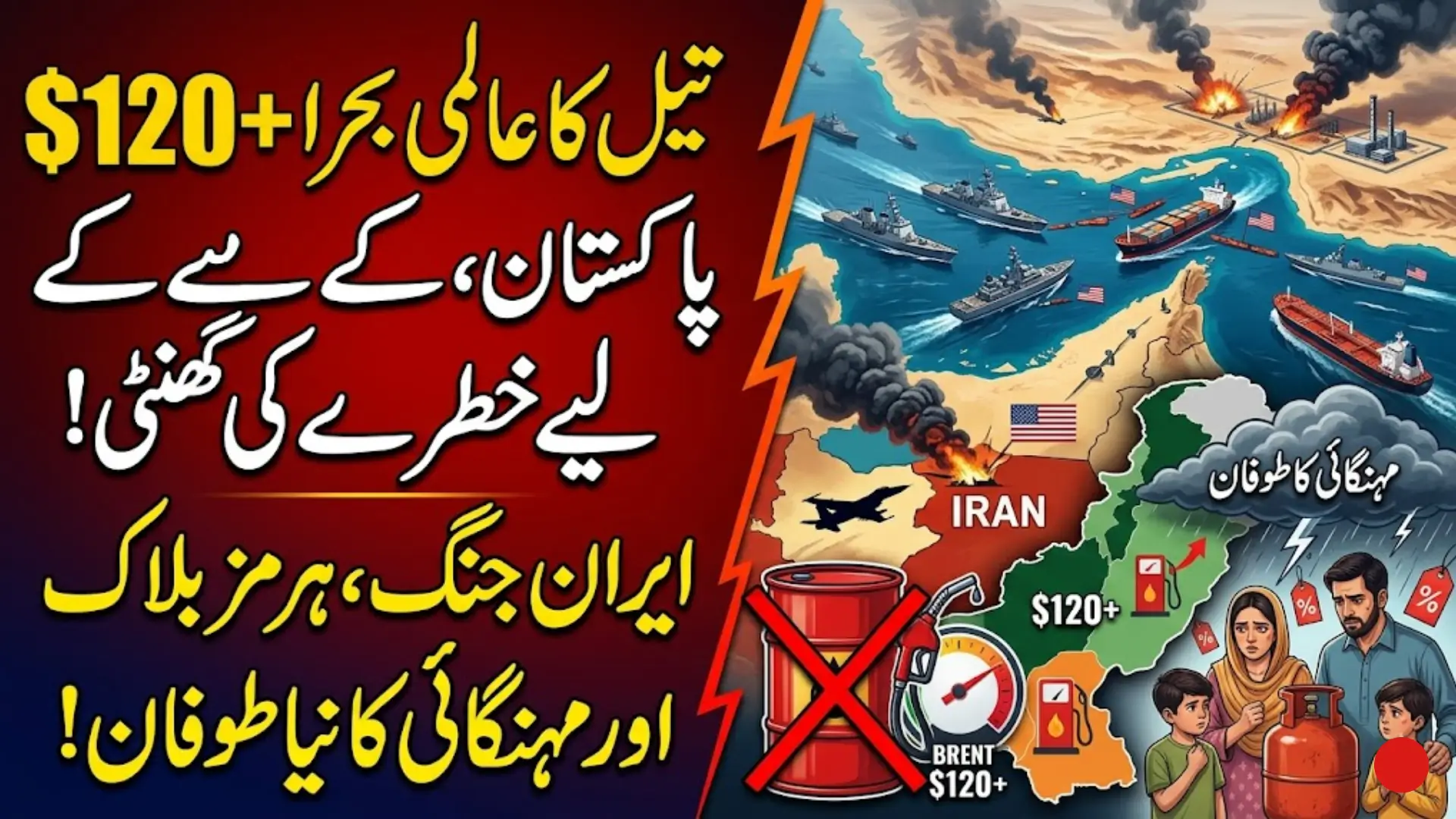
Oil Prices Cross $120
Oil Prices Cross $120 Global oil markets have entered a highly volatile phase, with Brent crude jumping above $120 per barrel and briefly touching $122. This sharp rise has taken place within a very short period, marking the highest level since 2022. For analysts, such a rapid increase is not just a routine fluctuation but a clear signal of deeper geopolitical stress affecting supply chains. The market reaction has been swift because traders are anticipating prolonged disruptions rather than a short-term crisis.
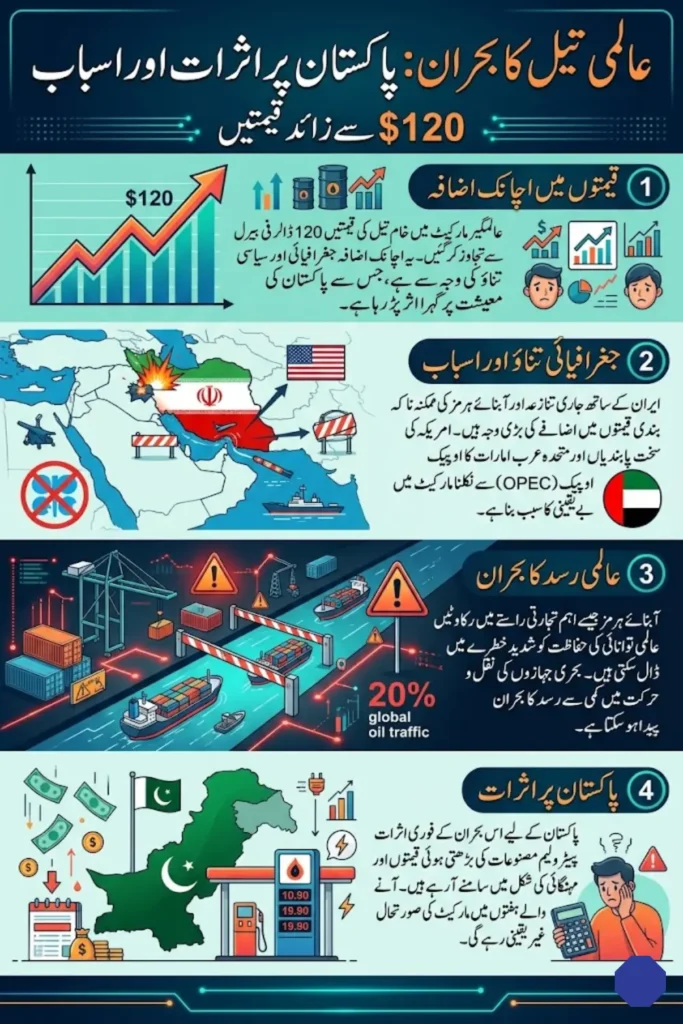
For Pakistan, this development is more than just international news. Whenever global oil prices rise, the effects quickly appear in the local economy. Fuel prices increase, transportation costs go up, and eventually the prices of basic goods also rise. From what can already be observed, this surge is likely to put additional pressure on inflation, making life more difficult for ordinary citizens who are already managing tight household budgets.
You Can Also Read: Apna Ghar Scheme 2026 20-Year Housing Loan Plan in Pakistan
Role of Donald Trump in Market Tensions
A key driver behind the latest surge is the firm position taken by US President Donald Trump regarding the blockade of Iranian ports. The decision to continue restrictions without any flexibility has created a strong signal in global markets that supply constraints may persist for a longer period. This has immediately affected investor confidence and pushed oil prices higher.
You Can Also Read: Lahore High Court Rejects Honda Atlas Appeal
From a market perspective, such political decisions often carry more weight than economic data. The refusal to ease restrictions has increased fears that Iranian oil will remain largely unavailable to global buyers. As a result, traders are factoring in long-term shortages, which is why prices have reacted so aggressively. This situation highlights how closely oil markets are linked to geopolitical strategies rather than just supply and demand figures.
Key outcomes of this stance include:
- Continued limitation on Iranian oil exports
- Increased fear of prolonged supply shortages
- Strong upward pressure on global oil prices
- Higher uncertainty among international investors
Impact of UAE Exit from OPEC Alliances
Another major factor influencing oil prices is the unexpected exit of the United Arab Emirates from the OPEC and OPEC+ alliances. These alliances play a critical role in managing global oil supply by coordinating production levels among member countries. When a key member steps away, it disrupts this balance and creates uncertainty in the market.
You Can Also Read: e-Learn She Earn Program 2026 Eligibility Requirements
The UAE’s exit has raised concerns about the future of coordinated oil production. Without unified control, countries may adopt independent production strategies, leading to instability in supply levels. Markets tend to react negatively to such uncertainty, and this has been clearly reflected in the recent price surge.
- Weakening of coordinated oil production strategy
- Increased unpredictability in supply management
- Loss of confidence in global oil market stability
- Immediate spike in oil prices due to uncertainty
Iran War and Its Effect on Energy Markets
The ongoing conflict involving Iran has become a central factor driving volatility in energy markets. Military escalation has not only affected oil production but also disrupted export routes. As tensions increase, the risk of further disruptions also rises, creating a cycle of uncertainty that directly impacts pricing.
You Can Also Read: Pakistan Court Restores Passport Blocking Powers
From a broader perspective, conflicts in oil-producing regions have always had a strong influence on global markets. In this case, the situation is even more critical because it involves key supply routes and major exporters. The longer the conflict continues, the more pressure it places on global oil availability, leading to sustained high prices.
Strategic Importance of Strait of Hormuz
The Strait of Hormuz remains one of the most important oil transit routes in the world, handling nearly one-fifth of global oil and LNG shipments. Any disruption in this narrow waterway immediately affects international energy markets. Currently, tensions in the region have significantly slowed down shipping activity, which has reduced the overall flow of oil.
You Can Also Read: iPhone 14 PTA Tax Increased in Pakistan April 2026
Iran’s restrictions on shipping movements, combined with military activity in the area, have made the situation even more critical. Shipping companies are becoming increasingly cautious, and some are avoiding the route altogether. This reduction in traffic is directly contributing to the supply shortage and pushing prices higher.
- Handles around 20% of global oil shipments
- Key route for international energy supply
- Current restrictions reducing shipping movement
- Direct impact on global oil availability
US Naval Actions and Shipping Disruptions
The involvement of US naval forces has added another layer of complexity to the situation. Interception of vessels linked to Iranian ports has created a tense environment in the region. This has discouraged shipping companies from operating freely, further limiting the movement of oil.
Such disruptions are not just temporary obstacles; they have long-term implications for global supply chains. When fewer ships are transporting oil, the available supply decreases, which naturally leads to higher prices. This is one of the main reasons why the market has remained under pressure in recent weeks.
Market Reaction and Investor Sentiment
Oil markets have shown extreme volatility since the beginning of the conflict. Prices have fluctuated sharply based on news updates and political developments. Meetings between energy executives and US leadership have further intensified speculation about the future of oil supply.
Investor sentiment has shifted towards caution, with many expecting prolonged instability. This has increased buying activity in the market, as traders try to secure supply in advance. Such behavior further drives up prices, creating a cycle of rising costs and growing uncertainty.
- Rapid price swings due to geopolitical developments
- Increased speculation in oil trading
- Rising concern about long-term supply issues
- Strong investor reaction to political decisions
Failed Ceasefire Talks and Rising Uncertainty
There was a brief period of optimism when ceasefire talks were held in Islamabad. During that time, oil prices showed signs of stabilization as markets expected tensions to ease. However, as negotiations failed to produce results, that optimism quickly disappeared.
The collapse of these talks has reinforced fears that the conflict may continue for a longer period. As a result, markets have reacted by pushing prices higher again. This shows how sensitive oil prices are to even small changes in political developments.
Risk of Long-Term Supply Crisis
One of the biggest concerns now is the possibility of a prolonged supply crisis. If disruptions in the Strait of Hormuz continue, global oil inventories could decline significantly. This would create a situation where demand exceeds supply, leading to sustained high prices.
For countries that depend heavily on oil imports, this could have serious economic consequences. Inflation could rise, and economic growth may slow down due to increased costs of production and transportation.
Global Energy Security Concerns
The International Energy Agency has already warned that disruptions in key oil routes like the Strait of Hormuz pose a serious threat to global energy security. Such disruptions can affect not only oil prices but also the availability of energy for industries and households.
Governments around the world are now closely monitoring the situation. The focus is on ensuring that energy supplies remain stable while also preparing for potential shortages.
Short-Term vs Long-Term Oil Price Outlook
In the short term, oil prices are expected to remain highly volatile. Any new development related to the conflict or shipping routes can cause sudden changes in prices. This makes it difficult for markets to stabilize.
In the long term, everything depends on how the geopolitical situation evolves. If tensions ease, prices may gradually come down. However, if the conflict continues or escalates, the market could see even higher price levels in the future.
Economic Impact on Countries Like Pakistan
For Pakistan, the impact of rising oil prices is immediate and widespread. The country relies heavily on imported fuel, which means any increase in global prices directly affects the local economy. Higher fuel costs lead to increased transportation expenses, which then push up the prices of essential goods.
The effects are already visible in different sectors:
- Increase in petrol and diesel prices
- Higher electricity generation costs
- Rising inflation in daily-use items
- Greater financial pressure on households
What Could Happen Next in Oil Markets
The future of oil markets remains uncertain, with multiple factors influencing price movements. Geopolitical decisions, military developments, and shipping conditions will all play a role in shaping the market.
Possible future developments include:
- Continued volatility in oil prices
- Further disruptions in supply routes
- Potential increase beyond current levels
- Market stabilization if tensions ease
Final Overview of the Oil Price Crisis
The current surge in oil prices is the result of multiple interconnected factors, including geopolitical tensions, supply disruptions, and market reactions. Each of these elements is contributing to the overall instability in the energy market.
For Pakistan, the situation requires careful management, as rising oil prices can have a significant impact on the economy. The coming weeks will be crucial in determining whether the crisis deepens or begins to ease. Until then, both policymakers and citizens will need to prepare for continued uncertainty.
Key Factors Behind Oil Price Surge
| Factor | Impact on Market |
|---|---|
| Iran War | Disrupted oil production and exports |
| Hormuz Blockade | Reduced global oil supply |
| UAE Exit from OPEC | Market instability and uncertainty |
| US Policy Decisions | Increased geopolitical tension |
| Shipping Restrictions | Limited oil transportation |